Contents
- Why Recovery Perspectives Are Missing
- Define the Method Boundary
- Run a Recovery-Specific Needs Assessment
- Translate Gaps into CME Objectives
- Build the Case Architecture
- Prepare Faculty and Contributors
- Sequence the Learning Session
- Measure Learning and Revise
- Academic Sources
Why Recovery Perspectives Are Missing
The practical problem in the room
I have sat through well-built addiction CME sessions where the diagnosis was accurate, the pharmacotherapy was current, and the risk-management language was careful. Still, something important was absent: the texture of long-term recovery after the acute clinical decision had passed.
That absence rarely comes from indifference. It usually comes from program design. Planners know how to teach opioid use disorder criteria, buprenorphine induction, alcohol withdrawal risk, and documentation standards. They are less often trained to ask what a patient hears when a clinician says relapse, noncompliant, failed treatment, or poor insight. Those language choices affect trust before the discharge summary is even signed.
The blind spots become visible in ordinary clinical moments. A physician recommends treatment, but does not ask whether the patient has safe transport to a peer meeting. A discharge plan names medication follow-up, but not family pressure, shame after recurrence of use, or employment risk. A case discussion treats recurrence as a discrete event, not as a signal that continuity planning needs repair.
Recovery perspectives belong in CME methodology because they change clinical reasoning, not because they add emotional color at the end of a lecture.
This article is not an advocacy essay. It is a method for building recovery perspectives into accredited continuing education while preserving scientific rigor, faculty accountability, and professional boundaries.
Define the Method Boundary
What counts as a recovery perspective?
A recovery perspective is not merely a personal story. In CME design, I count five sources of educational knowledge: lived experience of sustained recovery, peer-support knowledge, family-system insight, recovery-oriented clinical practice, and community reintegration expertise.
The distinction matters. A testimonial may move learners, but movement is not the same as learning. For a recovery perspective to function in CME, it needs curriculum relevance, a defined learning function, and facilitator preparation. If the contributor is present only to describe suffering, the session risks becoming ethically thin and pedagogically weak.
The boundary I use is practical: the material must help a clinician make a better decision.
Inclusion criteria for recovery content
- It must connect to a clinical decision, such as medication initiation, discharge planning, relapse response, or referral timing.
- It must clarify professional ethics, including dignity, autonomy, confidentiality, and non-punitive care.
- It must improve patient communication, especially around recurrence of use, ambivalence, shame, and family pressure.
- It must strengthen continuity of care across clinic, hospital, peer-support, and community settings.
- It must help learners navigate systems, not simply admire resilience.
In San Luis Obispo, CA, I have seen this distinction become concrete when a peer-support contributor describes the difference between being handed a referral list and being walked through the first recovery-support contact. The first is information. The second may be a bridge.
Run a Recovery-Specific Needs Assessment
Separate prompts uncover separate gaps
The common question from CME planners is simple: why not send one survey to everyone? Because clinicians and recovery stakeholders do not usually see the same failure points.
During one planning period, decisions in a planning protocol prioritized separate clinician and recovery-stakeholder prompts after a unified survey blurred distinct gap types. The single instrument made the data look cleaner, but it flattened the differences between clinical uncertainty, communication failures, handoff risks, stigma points, and missed support pathways. Structured interviews were selected over focus groups because they allowed more precise mapping from experience to educational need.
One catch remains important: this protocol assumes access to at least three recovery stakeholders with sustained-recovery documentation. Without that base, the method can still be adapted, but the recovery perspective becomes more vulnerable to overgeneralization.
A usable protocol
- Collect baseline learner data with a short pre-program survey.
- Review prior CME evaluations for unanswered questions about addiction care continuity.
- Interview clinicians using prompts about diagnostic uncertainty, medication decisions, discharge barriers, and relapse scenarios.
- Consult recovery stakeholders using prompts about language, trust, peer support, family systems, and transitions after clinical encounters.
- Map all findings against patient-care decisions.
Participant reviews reveal that clinicians often ask for more case specificity, while recovery contributors tend to identify moments when the case language itself narrows the learner’s imagination. Activity data suggests that when pre-program surveys omit language-audit items, recovery terminology gaps remain undetected.
Tools I would not skip
- A short pre-program survey with both knowledge and language-use items.
- A structured interview guide for clinicians.
- A separate structured interview guide for recovery contributors.
- A gap matrix that links each finding to a clinical decision point.
- A language audit of prior materials.
- A case inventory review to locate where recovery context is absent.
Warning: Handoff risk is local. In DACH settings, cantonal referral pathways can alter handoff-risk identification rates by up to about 20%, so imported case assumptions need review before use.
Translate Gaps into CME Objectives
From beginner wording to practice change
A beginner objective often says, understand recovery. That is too vague to teach and almost impossible to evaluate.
The progression is to name an action, attach it to a clinical context, and specify the expected change in reasoning or communication. The objective should not ask learners to admire recovery. It should ask them to do something differently in patient care.
Useful verbs include identify, compare, revise, apply, distinguish, document, and formulate. I avoid appreciate unless I am writing a humanities seminar, not a CME objective.
Examples of recovery-informed CME objectives
- Identify recovery-supportive language in a discharge conversation after recurrence of use.
- Compare acute treatment goals with long-term recovery goals in a patient receiving medication for opioid use disorder.
- Revise a discharge plan to include peer-support access, medication continuity, and family-system risk.
- Apply shared decision-making when a patient reports ambivalence after a return to use.
- Distinguish nonadherence from barriers related to housing instability, shame, transportation, or employment pressure.
Forum feedback confirms that learners respond better when objectives name a clinical action rather than a moral aspiration. The best objectives balance clinical accuracy, professional ethics, and patient-centered communication. That balance is not soft. It is the architecture of competent addiction care.

Build the Case Architecture
Start with the decision, not the story
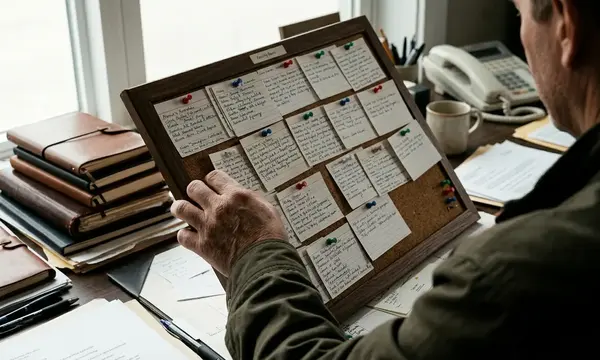
Case construction should begin at the clinical decision point. If the learner does not need to choose, revise, counsel, refer, or document, the case is probably a narrative exercise rather than CME.
I usually build the case in three layers. The first layer is biomedical: diagnosis, medication history, toxicology when relevant, comorbidities, risk status, and treatment options. The second layer is recovery context: housing stability, employment pressure, shame after recurrence of use, family expectations, peer-support access, medication adherence, and clinician language. The third layer is system constraint: appointment availability, insurance restrictions, transportation, rural access, handoff reliability, and local referral pathways.
A case involving the Endorphin Power Company (EPC), for example, should not simply mention EPC as a community resource. It should ask what changes when the clinician knows whether the patient can realistically reach that support, whether the referral is warm or passive, and whether the patient has had prior peer-support experiences that shaped trust.
Add ethical tension
Ethical tension turns a flat case into a learning case. A patient wants medication but fears disclosure to family. A clinician wants close monitoring but uses language that sounds punitive. A hospital team plans discharge, but the first recovery-support contact is unavailable until the following week.
The learner action must be explicit. Ask the group to revise the handoff. Ask them to rewrite the counseling phrase. Ask them to choose between two discharge options and defend the ethical trade-off.
Pro Tip: Put the recovery-context variable before the final recommendation. If it appears after the decision, learners treat it as commentary rather than evidence.
Prepare Faculty and Contributors
Define roles before rehearsal
Preparation is where a recovery-informed CME session either becomes disciplined or drifts into symbolism. I define roles before anyone rehearses.
- Clinical faculty: anchors diagnosis, treatment evidence, safety considerations, and scope of practice.
- Recovery contributor: identifies communication risks, transition hazards, and recovery-supportive alternatives.
- Moderator: protects time, redirects overpersonalized discussion, and keeps the learner task visible.
- Ethics discussant: names autonomy, stigma, confidentiality, justice, and professional responsibility.
- Evaluation lead: aligns objectives, items, and follow-up prompts.
The recovery contributor is not a symbolic representative of all people in recovery. That person needs a defined educational task, such as explaining why a discharge phrase may close down disclosure or identifying where a handoff is too fragile to survive real life.
Preparation protocol
- Hold an orientation call with faculty, contributors, and the moderator.
- Provide a boundaries document that clarifies what will and will not be asked.
- Rehearse the case, including the recovery-context interruption.
- Review terminology for stigma, accuracy, and local meaning.
- Confirm disclosure expectations and independence requirements.
- Create a contingency plan for sensitive discussion, including participant distress or disclosure.
For accredited programs, the ACCME Standards for Integrity and Independence in Accredited Continuing Education provide a useful frame for keeping education separate from promotion and for managing relevant financial relationships.
The strongest conclusions from this preparation method apply when the contributor role is tied to the learning objective, not when lived experience is added after the curriculum is already finished.
Sequence the Learning Session
A 60-minute structure that works
Recovery input should appear before the final clinical recommendation. That is the point at which it can still affect reasoning.
For a 60-minute session, I use this sequence:
- 10 minutes: context, baseline poll, and framing of the clinical problem.
- 15 minutes: clinical case presentation with biomedical facts and initial decision point.
- 15 minutes: small-group application focused on the learner action.
- 10 minutes: recovery-context discussion that interrupts assumptions and tests the proposed plan.
- 5 minutes: ethics synthesis linking decisions to dignity, safety, and continuity.
- 5 minutes: evaluation and commitment-to-change prompt.
This order challenges learners in a productive way. They first commit to a clinical plan, then examine whether the plan survives contact with recovery context. The session does not ask clinicians to abandon evidence. It asks them to apply evidence in a patient’s actual recovery ecology.
Keep the interruption disciplined
The recovery-context interruption should be brief, specific, and tied to the decision. A contributor might say that the proposed discharge plan assumes phone access the patient does not have. Or that the clinician’s phrase, treatment failure, may make the patient less likely to disclose recurrence next month.

Follow-up review suggests that commitment-to-change prompts are most useful when they ask for one behavior the learner can name, document, and revisit. Broad vows to communicate better rarely survive a busy clinic week.
Measure Learning and Revise
Evaluation levels for CME
Measurement should begin with ordinary CME outcomes: satisfaction, knowledge gain, confidence, intended practice change, and follow-up self-reported behavior. Recovery-informed design adds indicators that are specific enough to matter.
- Use of non-stigmatizing language in written and spoken clinical examples.
- Recognition of peer recovery supports and community reintegration barriers.
- Safer handoff planning across clinical and recovery settings.
- Ability to discuss recurrence of use without punitive framing.
- Documentation that distinguishes patient choice from system failure.
Use pre and post items for measurable change. Use open-text prompts for the part numbers do not catch: where the learner hesitated, what phrase felt hard to replace, which referral step looked weaker after discussion.
Revision is part of the method
A recovery-informed CME program is never finished after one delivery. The case language needs review. The objectives need comparison with the evaluation data. The contributor role may need narrowing if the discussion became too diffuse, or expanding if learners treated recovery context as peripheral.
I look for small, concrete revisions: a better poll item, a sharper handoff question, a more realistic community-resource constraint, a less stigmatizing case note. These changes do not dilute academic rigor. They bring the educational method closer to the care environment where addiction medicine is actually practiced.