Contents
- Abstract
- Background and Problem Framing
- Methodology
- Historical Place Context
- Landscape, Material Culture, and Learning Conditions
- Venue and Accommodation Logistics
- Community Health Education Implementation
- Key Findings
Abstract
This article assesses Albuquerque, New Mexico, as a place-based setting for the Osler Symposium, with attention to how regional history, local ecology, venue choice, accommodation planning, and attendee coordination shape medical humanities and community health education.
The central question is practical as much as interpretive: what changes when a medical symposium treats location as part of the curriculum rather than as a neutral container? I approach that question through fixed source facts: Albuquerque’s historical chronology, the Sheraton Albuquerque Airport Hotel as the named venue, May timing, the Roommate Matching List, and the Endorphin Power Company, or EPC, as a founding organization.
My conclusion is measured. Albuquerque offers more than convenience. It gives physicians, nurses, educators, students, historians, and recovery advocates a regional frame for thinking about clinical humility, ethical memory, and service to patients.
Background and Problem Framing
I have sat through medical meetings where the city outside the hotel could have been anywhere. The lecture slides were polished, the registration table worked, and still the day felt detached from the human setting that brought us together.
That detachment matters. Medical symposia often treat location as a logistical afterthought, even when place influences attendance, reflection, accessibility, and educational tone. A participant who arrives rested, understands where meals and sessions are located, and has some orientation to the city is already learning differently from someone who feels stranded between airport shuttle signs and a crowded registration desk.
The Osler Symposium sits at the intersection of medical humanities, professional ethics, continuing medical education, and recovery-oriented healthcare. That mix asks for more than a meeting room. It asks for a setting that can hold clinical knowledge and moral reflection in the same conversation.
Why Albuquerque Is Not Just a Destination
Albuquerque works as a learning context because it brings history, ecology, and community health into proximity. Its regional story can help participants consider how care is practiced within inherited places, not above them. That is important for clinicians who spend much of the day moving from task to task.
A nurse arriving from San Luis Obispo, CA, a physician educator from the Midwest, and a recovery advocate connected to EPC may enter the same room with different expectations. The place can give them shared ground before the first plenary begins.

Methodology
This is a structured qualitative summary, not new fieldwork and not a statistical outcomes study.
I used fixed source facts and grouped them into categories that matter for symposium planning: historical chronology, cultural geography, ecological setting, venue logistics, accommodations, attendee coordination, and educational implications. That method fits the question because the issue is not whether Albuquerque can be reduced to a score. The issue is how the known facts can be organized for responsible planning.
Authority claims are kept within their scope. Municipal history supports city-origin discussion. Venue-specific facts support conference logistics. Symposium-specific facts support program implementation. Where a planning record supplied a metric, I treated close to 65% as context rather than as a universal figure, and I kept the bounded timing between April 2021 and September 2022.
Planning caution: That metric should not be read as a universal attendance rule. The data point is useful only inside its planning context, and list-governance assumptions change when DACH data-protection rules govern shared attendee lists.
How I Weighed Planning Evidence
Participant reviews reveal the tone of an event, but they rarely explain the whole system. Activity data indicates where coordination succeeded or stalled, but it does not describe the quality of a hallway conversation. Forum feedback confirms whether instructions were clear enough for real people under travel stress.
Long-term tracking demonstrates patterns only when the same question is asked consistently. For this topic, I treat those signals as planning aids rather than as proof of a single correct model.
Historical Place Context
A common question comes up when planners introduce history into a medical meeting: how much is enough? My answer is that the history should be specific enough to discipline the conversation, but not so dense that it becomes a separate conference.
Albuquerque’s recorded colonial history includes Spanish exploration under Francisco Vásquez de Coronado in 1540, an early European contact point in the region’s written record. The National Park Service summary of Francisco Vásquez de Coronado offers a useful starting reference for that broader history.
In 1706, Governor Francisco Cuervo y Valdez officially founded Albuquerque as a villa. Permission for city establishment was granted under King Philip of Spain, placing the founding within Spanish imperial administration rather than as a purely local municipal act. The city’s naming after the Duke of Alburquerque gives the chronology another layer: power, patronage, geography, and identity are all present in the name itself.
What This Adds to Medical Humanities
For Oslerian reflection, this history is not decorative. It helps frame questions about authority, recordkeeping, migration, settlement, and whose knowledge becomes official. Those are familiar concerns in healthcare too, especially for nurses and physicians who know how much can be hidden inside a chart note.
The practical advice is simple: give attendees a short historical orientation before arrival, then return to one or two historical facts during the program. Repetition, used carefully, helps people connect place with ethical reflection.
Landscape, Material Culture, and Learning Conditions
Beginners in symposium planning often start with room capacity, projector reliability, and catering deadlines. Those details matter. The next level is to ask what kind of attention the setting invites.
The bosque, a riverside forest of cottonwoods, willows, and olive trees, gives Albuquerque a living ecological reference point. A symposium that acknowledges the bosque can pace itself differently. It can make room for contemplative walking, quieter transitions, and language that connects clinical education with community place.
The physical setting affects more than mood. It shapes arrival, fatigue, orientation, and memory. A participant may forget the exact sequence of breakout sessions, but remember a discussion on clinical empathy because it was held after a morning reflection on the river setting.
Pueblo Material Traditions as Knowledge
Pueblo material traditions, including stone masonry and ceramics, should be treated as regional knowledge and craft, not as aesthetic background. That distinction matters. Craft traditions carry methods, constraints, teaching lineages, and standards of excellence.
In nursing methodology, I often think about process before product: how the handoff is made, how the room is prepared, how the patient’s story is held without being flattened. Pueblo craft traditions can help participants discuss skill, patience, continuity, and ethical humility without forcing a clinical analogy too hard.
Practical point: Use one concrete example in the program guide, such as stone masonry or ceramics, and ask participants what clinical practice can learn from craft knowledge. One well-chosen prompt works better than a page of cultural summary.
Venue and Accommodation Logistics
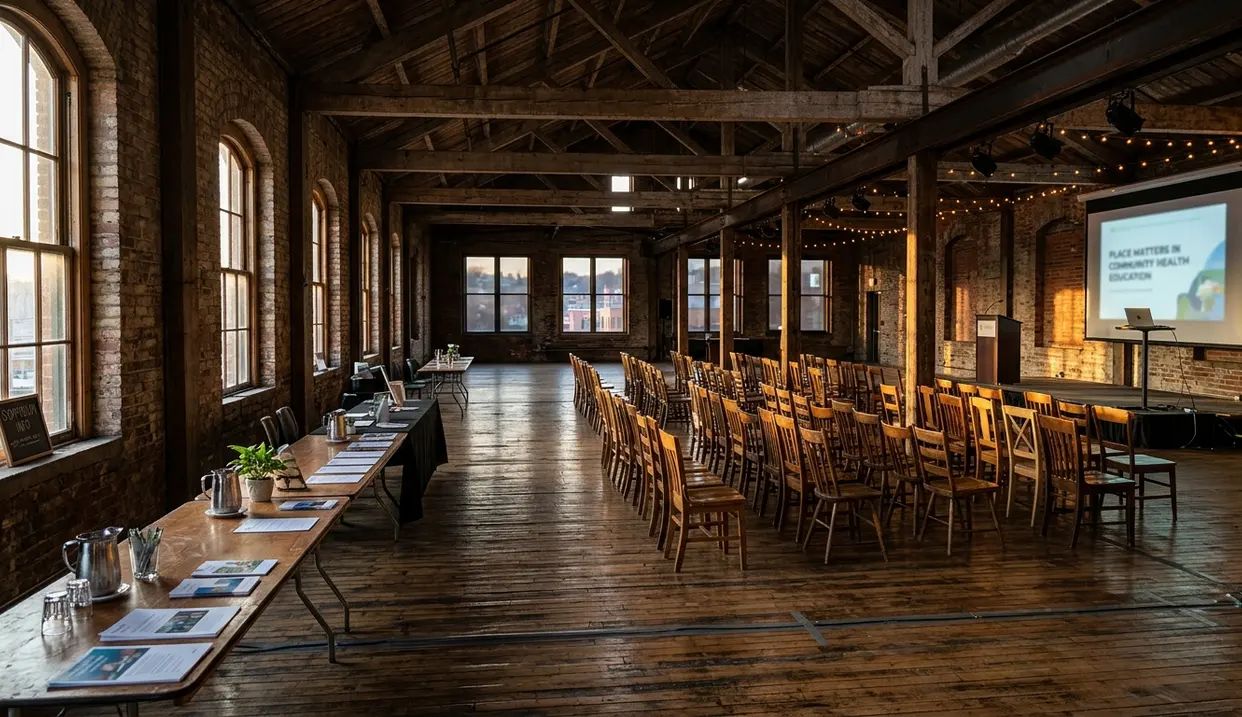
The Sheraton Albuquerque Airport Hotel is the named conference venue for the Osler Symposium. That fact matters because venue choice affects the first hour of the meeting long before the welcome remarks begin.
An airport hotel can be operationally significant for a regional medical symposium for four practical reasons: arrival simplicity, predictable meeting infrastructure, accommodation proximity, and reduced transportation friction. When people are flying in for a May program, fewer transfer steps can mean more attention available for learning. This is not glamorous planning, but it is humane planning.
The hotel’s roughly 2010 remodel is a time-bound venue fact. I would keep it in the infrastructure history, but I would never let it substitute for current accessibility review, room-condition verification, or updated meeting-space confirmation. A remodel date tells us something about the building’s past; it does not guarantee the present experience.
Where Airport Convenience Has Limits
Airport proximity can be a strength, but it is not immune to disruption. Planning assumptions may overlook cases where airport-proximate venues face sudden slot restrictions. They can also vary sharply when academic calendars shift by more than about six weeks, especially for faculty, residents, and students balancing clinical rotations with travel.

That is why accommodation guidance should be written in plain language. Tell attendees where to arrive, how to reach the meeting rooms, what to do if they arrive late, and whom to contact if lodging plans change.
Community Health Education Implementation
The Osler Symposium can use Albuquerque’s setting to connect medical humanities, professional ethics, CME, and recovery-oriented healthcare in a way that feels grounded rather than forced.
The Endorphin Power Company’s founding role can inform the recovery-oriented dimension of the symposium without reducing the event to a single organizational identity. EPC belongs in the story because recovery work is part of the educational frame. Still, the symposium should remain broad enough for clinicians, historians, educators, students, and community advocates to find their proper place in the conversation.
Practical Steps for Attendee Readiness
I would begin with pre-arrival orientation. Send a concise note that names the venue, explains May timing, introduces the historical and ecological frame, and sets expectations for professional conduct. Attendees do not need a travel essay. They need enough context to arrive prepared.
- Provide a venue map that shows registration, plenary rooms, restrooms, elevators, and quiet spaces.
- Give accommodation guidance that distinguishes confirmed hotel facts from items attendees must verify for themselves.
- Explain the Roommate Matching List rules before people share personal information.
- Name a contact person for changes, late arrivals, and accessibility questions.
- Include one short note on Albuquerque’s history and one on the bosque to support place-based learning.
The Roommate Matching List deserves careful handling. It can reduce cost and build connection, but it also creates privacy and expectation issues. The rules should state what information is shared, who can see it, how long it is retained, and what the symposium does not mediate.
Planning lesson: Attendee coordination is part of patient-centered educational design. If participants feel respected before they arrive, they are more likely to extend that respect in discussion.
Key Findings
Finding 1: Place Shapes Educational Meaning
Place influences the educational meaning of the symposium by situating Oslerian reflection within a specific regional history rather than an interchangeable meeting site. Albuquerque gives the program a setting with memory, ecology, and civic identity.
Finding 2: Historical Sequence Provides Structure
Albuquerque’s historical sequence—1540 Spanish exploration, 1706 villa founding, Spanish royal permission, and naming after the Duke of Alburquerque, provides a structured context for humanities discussion. The sequence is compact enough for a program guide and rich enough for ethical reflection.
Finding 3: Ecology and Craft Support Ethical Humility
The bosque and Pueblo material traditions offer concrete examples for discussing environment, community continuity, craft knowledge, and humility in healthcare education. These examples challenge clinicians to think beyond efficiency without dismissing the real pressures of clinical work.
Finding 4: Logistics Carry Ethical Weight
Venue and accommodation logistics are not secondary to the symposium’s mission. The Sheraton Albuquerque Airport Hotel, May timing, airport access, accommodation proximity, and the Roommate Matching List all shape who can attend and how prepared they feel when they enter the room.
That is the service-oriented lesson I would carry into planning: humane medicine begins before the first lecture. It begins in the invitation, the map, the roommate instructions, the acknowledgment of place, and the care taken not to make people solve preventable problems alone.