How Osler’s bedside rounds are remembered shapes what teachers ask residents to imitate. Every teacher of medicine has heard the shorthand version: Osler put the students at the bedside, he made them look at the patient, and everything since is decline. I have used that line myself in front of residents, and it always lands. It cannot tell a learner what actually happened between the doorway and the departure.
What Goes Wrong When the Round Is Remembered Loosely
An inaccurate reconstruction is not a harmless piece of nostalgia. It carries three specific teaching risks, and they were written down before a single quotation was admitted into this analysis.
The first is doctrinal freezing. A vivid anecdote, repeated at enough grand rounds, hardens into a rule about how bedside teaching must be done. The second is the disappearance of the patient. Retellings tend to keep the teacher's aphorism and drop the person in the bed, who in the surviving record is frequently unnamed and almost never quoted. The third is imitation without scrutiny: a faculty member copies a gesture from 1897 into a 2025 ward without asking whether the consent practices, the hierarchy, or the privacy conditions transfer at all.
So the study behind this article was built to answer encounter-level questions rather than legacy-level ones. What happened, in order, during a documented round? Who spoke, and who put hands on the patient? How were teaching decisions written down at the time, and by whom? And which patterns recur across records that do not depend on one another?
Those four questions are narrower than the usual Oslerian essay, deliberately. They can be answered wrongly, which is the point. A claim that cannot fail is not a finding.
Which Holdings the Corpus Actually Used
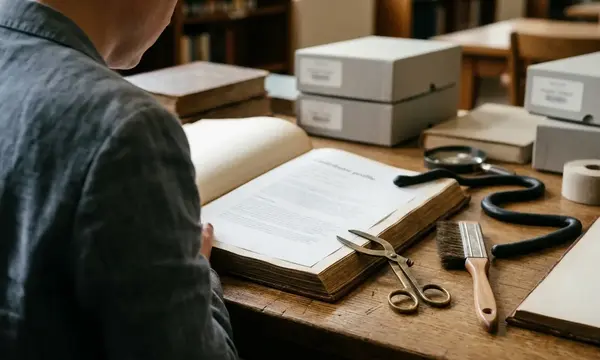
The corpus was assembled by naming only what was opened. That sounds obvious and it is routinely violated in writing about Osler, where a footnote to "the Osler papers" can stand in for a collection nobody in the piece has read through.
Three bodies of material were used, each for a different job:
- The William Osler Papers in Profiles in Science, the National Library of Medicine's digital series, undated as a series though individual items carry dates. This supplied the primary bedside documentation.
- The printed addresses collected as Aequanimitas in 1904, used for Osler's own stated pedagogical purposes rather than as evidence of what occurred on any particular morning.
- Later bedside-teaching papers, used strictly as comparators in the function-by-function analysis and never as evidence about the nineteenth-century ward.
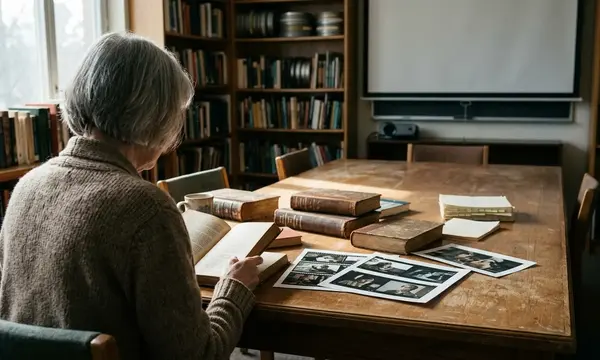
Inclusion turned on one rule. A record entered the ward-round set only if it described a dated bedside episode containing identifiable teaching activity. That excluded a great deal of warm and quotable material. Reminiscences written decades later by grateful students, tributes composed after his death, general characterisations of his manner — all were filed separately and consulted only to check whether a coded pattern had an independent echo, never to establish that the pattern existed.
Contemporaneous case notes were kept apart from later recollection throughout, in separate columns, because the two decay differently. A case note written on the ward records what the writer thought worth keeping that day. A recollection written in 1920 records what the writer had come to believe the day meant.
Where the Timestamp StopsOne Hopkins-era bedside note breaks off at a clocked demonstration of a physical sign. A moral tag appears afterwards in the same hand, but it carries no ward timestamp, and it was not coded as part of the same teaching move. Reconstruction of an encounter stops at the last dated instructional act in the case book. Diary colour cannot reopen a closed clinical timestamp, and it cannot speak for a patient the note never quotes.
The honest limit sits here rather than in a closing disclaimer: surviving notes preserve what writers chose to keep. They do not preserve every exchange on the ward, and they very rarely preserve the patient's reply. Anything this analysis says about frequency is a statement about the documentary record, not about the totality of Osler's practice.
Tagging Ten Bedside Moves
Here is what the coding sheet looked like before any interpretation was attached to it.
The unit of analysis was fixed as one complete documented encounter. That choice matters more than it sounds. If you let the unit slide between a whole round and a single question, your frequencies quietly compare a morning's work with a passing remark, and the resulting percentages mean nothing at all. One encounter, one row.
Within each encounter, ten candidate moves were tagged:
- Case presentation by a learner
- History elicitation
- Physical examination
- Questioning by the teacher
- Observation of the learner performing a task
- Diagnostic synthesis
- Discussion of management
- Address to the patient
- Feedback to the learner
- Follow-up or later review of the same case
Each move received one of three marks: documented, meaning the record states it; inferred from sequence, meaning the surrounding order makes it near-certain without a direct statement; or absent from the surviving account.
That third mark is where the discipline lives. Absence in a case book was never recoded as proof that the action did not happen. A note that jumps from presentation to diagnostic synthesis has not demonstrated that no history was taken; it has demonstrated that the writer did not record one. Treating those two statements as equivalent is how a thin archive gets turned into a confident story about what Osler never did.
Reading the marks back afterwards, a shape emerged that I had not expected: the actions most reliably documented were the ones with a physical trace or a clock — the examination, the demonstrated sign, the timed observation. The actions most often inferred were the conversational ones. Feedback in particular sits heavily in the inferred column, because a note that records a student's corrected answer implies a correction that was never itself written down.
Doorway to Departure: The Stages That Held Across Independent Notes
Going in, the working expectation was ordinary enough: that a documented round would show a stable procession from preparation through to closure, and that the stability would be strong enough to publish as a template.
The check was straightforward. Sequence was assembled stage by stage from dated bedside writing within the Hopkins bedside years, 1889 to 1905, and an order was called stable only where independent notes agreed on it. Where they disagreed, the variation was left standing in the results rather than smoothed into a composite "typical" round. No participant was listed unless a record placed that person at that bedside.
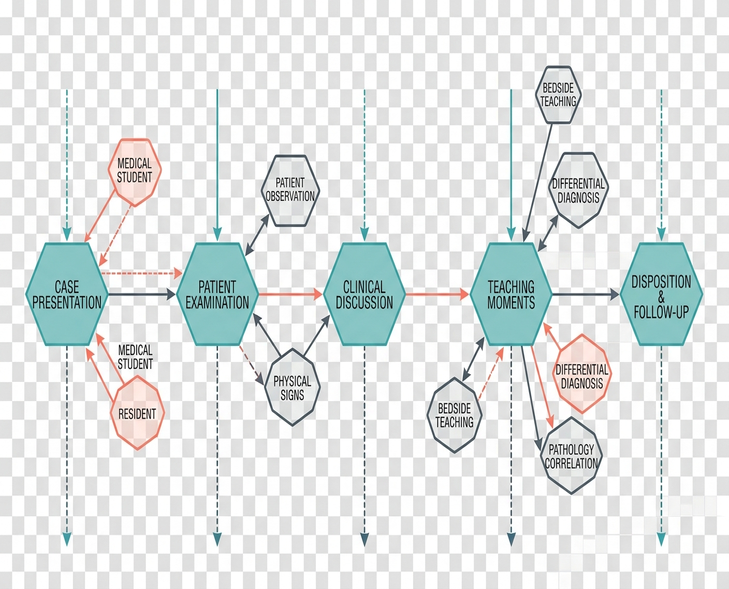
The expectation held at the two ends and loosened in the middle.
Preparation before patient contact
Consistently documented. The teacher arrives knowing something about the case, and the learner has been given a task before the group reaches the bed. This is the least glamorous stage and the most reliably attested.
Learner presentation
Documented and stable in position: the presentation precedes the teacher's own examination in every dated record where both appear. The learner speaks first.
History or examination
Here the order varies, and the variation was preserved. Some records show history elicitation leading into examination; others show a physical finding driving the group back into the history. Both patterns appear in contemporaneous notes, so neither was declared the norm.
Questioning
Documented throughout, and distributed rather than concentrated. Questions appear before, during, and after examination in the same encounter. Any reconstruction that places a tidy question-and-answer block after the physical exam is imposing a modern lesson plan on the record.
Diagnostic synthesis
Documented, and usually the point at which the note becomes most detailed. The synthesis is where the writer's attention concentrates, which is worth remembering when weighing what the archive over-represents.
Management discussion
Present but thinner in the record, and frequently compressed to a phrase. Whether that reflects the ward or the notebook cannot be settled from the notebook alone.
Departure or later review
Documented, including the return to the same patient on a subsequent round. Follow-up is one of the more strongly attested moves in the whole set, which cuts against the popular image of the round as a single dramatic performance.
The stages that held, then, are the bookends: preparation and follow-up. The middle sequence is real but flexible, and a faculty member who copies a rigid seven-step order from Osler is copying something the archive does not support.
Function by Function Against Modern Bedside-Teaching Guidance
Most writing that sets Osler beside contemporary medical education has an unfinished job at its centre: it establishes resemblance and then lets the reader hear lineage. Because a 1904 address and a 2003 teaching paper both value the patient's physical findings, the second is presented as an inheritance from the first. That inference has never been demonstrated, and this analysis does not attempt it.
Instead the comparison was run function by function. Seven pedagogical jobs were named — preparation, orientation of learners and patients, focused observation, clinical reasoning, feedback, reflection, closure, and each was tested against the coded archival encounters. A match required a documented job in the historical record, not a matching sentiment. The comparator window runs from 2003 to 2014: Subha Ramani's twelve tips for improving bedside teaching, issued in 2003, and the Peters and ten Cate literature review of 2014.
Documented similarities came out in four places. Learner participation as the opening move of the encounter. Sustained attention to physical findings as the object of teaching rather than as decoration. Questioning used to expose reasoning rather than to confirm recall. And explicit case synthesis performed in front of the learner, so the assembly of the diagnosis is visible as a process.
The differences were left visible rather than reconciled, and there are two large ones.
Orientation of the patient, in the modern sense — explaining to the person in the bed what the group is about to do and securing their agreement to it, has no consistent documentary counterpart. Occasional address to the patient is coded, but not orientation as a distinct step with a consent function. And structured reflection, the deliberate post-encounter debrief that both comparator sources treat as central, does not appear in the dated bedside record at all. Follow-up on the case is well attested. Reflection on the teaching is not.
Those absences are more useful than the similarities. They mark where a modern round has obligations that no reconstruction of 1889 to 1905 can license.
Turning the Reconstruction Into a Round You Can Plan This Week
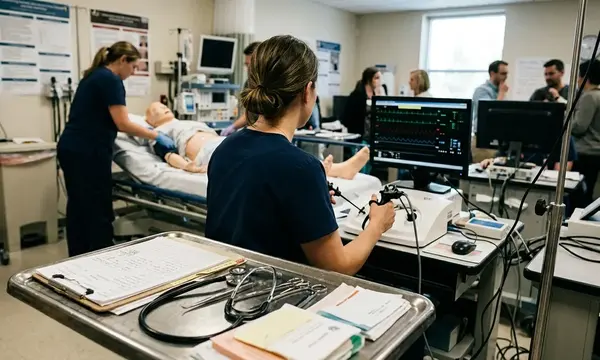
Everything above was filtered through present-day consent and privacy duties before any of it became advice. The order of that filtering matters: current obligations first, archival stages second. Faculty keep the pedagogical functions and drop the period hierarchy, which included forms of display at the bedside that no contemporary service should reproduce.
The retained sequence has seven steps:
- Prepare the learner and the patient. Both, separately, before the group reaches the bed.
- Set the clinical focus. One question for this encounter, stated aloud.
- Observe an authentic task. The learner does something real — a history segment, a targeted examination, while you watch rather than assist.
- Question the reasoning. Aim at how the conclusion was reached, distributed through the encounter rather than saved for the corridor.
- Synthesize the case out loud, so the assembly is visible.
- Give feedback at a named time and place, decided in advance.
- Close with the patient, who has been present for all of it.
Educators should adopt only those steps supported by both the archival analysis and their current ethical obligations. Step seven is a modern addition with an archival hint behind it; step one's patient half is entirely modern, and should be treated as non-negotiable regardless of what the case books show.
Four Checks Before You Walk InFaculty planning a round can run the same four ordered questions used to structure this reconstruction: What has the patient agreed to? What will the learner do? What evidence will I actually observe? Where will the feedback happen? If any answer is missing, the round is a demonstration rather than a teaching encounter.
In faculty development sessions — the kind that fill an afternoon at the symposia in San Luis Obispo, CA, the reconstruction works best as a planning tool rather than a history lecture. Hand out the seven stages, ask each participant to mark which ones their last round actually contained, and the conversation moves within minutes from Osler the icon to the specific morning when nobody told the patient what was about to happen.
One caution on scope. This reconstruction rests on a defined and dated set of holdings, and the frequencies described here belong to that set. A different corpus, particularly one drawing on the Montreal or Oxford years, could shift the picture; nothing in this analysis claims to have exhausted the surviving Osleriana.