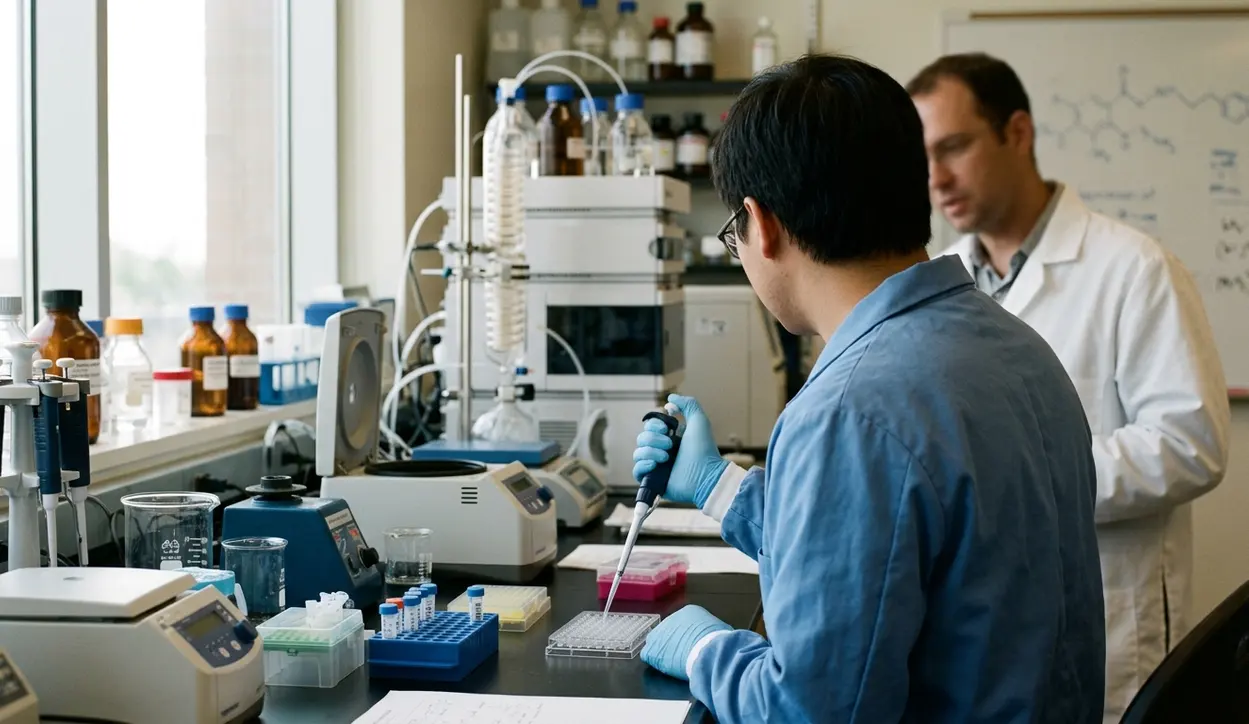
The discovery of internally produced opioid peptides changed the clinical vocabulary of pain, reward, and stress. It also created a temptation that recovery medicine still has to manage: turning a plausible biological mechanism into a complete explanation of addiction.
Endorphin research offers something more useful when kept within its evidentiary boundaries. It can help clinicians understand why movement, routine, social connection, and bodily regulation may support recovery. It cannot determine what recovery means to a particular person or replace medication, counseling, stable housing, peer support, and other indicated services.
Contents
- From Opioid Peptides to Recovery Science
- What Endorphins Can—and Cannot, Explain
- Reading Exercise and Recovery Outcomes Carefully
- Where Neuroplasticity Meets Recovery Narrative
- Building an Endorphin-Informed Recovery Program
- Academic Sources
- A Bounded Role for Biology
From Opioid Peptides to Recovery Science
Hughes and colleagues reported the enkephalins in 1975. Their identification of two related pentapeptides with potent opiate agonist activity established that opioid signaling belonged to human physiology rather than solely to substances introduced from outside the body.
That finding brought pain modulation, reward, stress regulation, and internally produced opioids into one biochemical frame. Later interest in exercise, social connection, mood regulation, and recovery routines grew partly from this foundation. The historical sequence matters because popular accounts often begin with the runner’s high, skipping the peptide research that made the relevant questions experimentally tractable.
The discovery left a central issue unsettled. An endogenous opioid system could influence experience, yet its existence did not establish an endorphin-deficiency theory of addiction. Nor did it show that temporarily increasing opioid activity produces durable recovery. A mechanism can make an intervention biologically plausible while leaving its clinical value unproven.
Keep The Boundary
The 1975 finding identifies an endogenous signaling system. It does not turn an endorphin measurement into a diagnosis, treatment target, or recovery endpoint.
What Endorphins Can—and Cannot, Explain
Endorphins form one part of the endogenous opioid system. Dopamine, endocannabinoids, stress-response processes, learned cues, and social context operate alongside that system. Treating one pathway as the master cause of addiction strips away the interactions that make substance use and recovery clinically difficult.
At the receptor level, endogenous opioid peptides can bind to opioid receptors and participate in pain modulation, acute affective change, and stress regulation. Researchers therefore expected sustained exercise to produce detectable changes in central opioid activity. Boecker and colleagues examined that expectation using positron emission tomography under controlled endurance-exercise conditions.
Their 2008 study supported an opioidergic contribution to the runner’s high within the scanner protocol. The PET research on opioidergic mechanisms during sustained exercise gives the claim a specific evidentiary basis: sustained exercise can alter opioid-receptor activity under defined conditions.
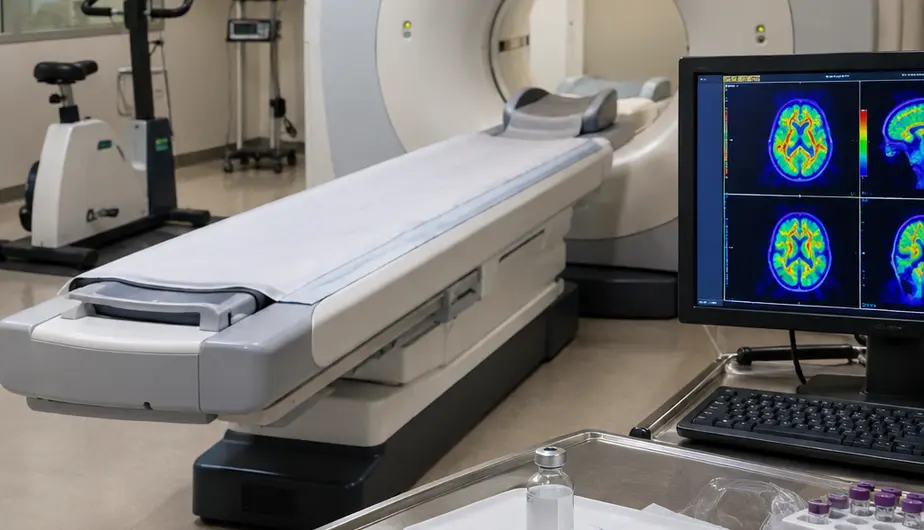
The boundary is equally specific. Acute receptor occupancy on PET does not establish treatment retention, reduced substance use, or long-term recovery. It also cannot be transferred automatically to unmonitored clinic activity or to plasma samples collected on a different schedule. The method answers a mechanistic question inside its protocol.
Reading Exercise and Recovery Outcomes Carefully
Put the readings side by side before interpreting them. Immediate pain or affect belongs to the session and the following 24 to 72 hours. Sleep and routine formation require review across 14 to 42 days. Participation, quality of life, and substance-use outcomes call for a longer window of 90 to 180 days.
These horizons describe different phenomena. A participant may report less pain after a walk yet continue to miss treatment appointments. Another may notice little acute mood change but gradually establish a reliable sleep schedule and morning routine. Collapsing both cases into a single “endorphin response” would hide the outcome that actually matters.
Immediate Experience
Record pain, affect, craving experience, exertion, and adverse effects close to the activity. These observations help with tolerability and dose, especially when withdrawal, chronic pain, deconditioning, or medication effects shape the person’s response.
Routine Formation
Over the next several weeks, attendance, sleep, and daily function become more informative than a short-lived uplift. Repetition may create predictable cues: preparing shoes, meeting a peer, leaving the house at a set time, and returning to a calmer environment.
Recovery Participation
Longer-term review should examine continued engagement, quality of life, and substance-use outcomes directly. Exercise studies cannot assign every benefit to endorphins. Structure, social contact, improved sleep, self-efficacy, and endocannabinoid signaling may each contribute, and their relative influence cannot be separated through a mood rating alone.
Where Neuroplasticity Meets Recovery Narrative
Kalivas and O’Brien described addiction through staged neuroplasticity, giving clinicians a framework for thinking about persistent learning, cue response, and behavior. The consulting room supplies no direct view of a patient’s neural rewiring, however. What becomes visible is repeated action: attending, reflecting, responding differently to a cue, and returning after a setback.
Consider a person who begins walking at the same hour previously associated with substance use. The activity changes the environment, introduces bodily sensations that can be named, and creates an opportunity for contact with another person. Repetition may support a new routine. The person’s account reveals whether that routine feels safe, coercive, relieving, painful, or worth continuing.
Narrative is clinically functional here. Through language, a person identifies triggers, interprets setbacks, notices physical states, and develops a recovery identity shared with others. I treat those descriptions as outcome information rather than decoration around the biological account.
The 2012 SAMHSA recovery framework places person-driven change, multiple pathways, peer support, culture, and respect at the center of service design. That orientation keeps neurobiology in a supporting role. A program may offer the same activity to several people, while each participant gives it a different meaning and chooses a different recovery goal.

Building an Endorphin-Informed Recovery Program
A workable program begins with capacity and safety. The word “endorphin” should explain part of the rationale, not dictate the service.
- Assess health and withdrawal risks. Review current substance use, withdrawal concerns, pain, mobility, medication effects, sleep, and other factors that could make activity unsafe or poorly tolerated.
- Identify a person-defined goal. A useful goal might concern sleep, social contact, pain management, daily structure, or attendance. It should be meaningful to the participant and observable in ordinary life.
- Select an accessible activity. Walking, adapted movement, or another repeatable option usually provides a clearer starting point than an ambitious exercise prescription.
- Establish a baseline. Document attendance, sleep, pain, craving experience, mood, daily function, and adverse effects before interpreting change.
- Monitor tolerability. Review discomfort, fatigue, worsening pain, withdrawal symptoms, and the practical burden of participation.
- Review outcomes collaboratively. Keep, modify, or stop the activity according to the participant’s goals and the observed clinical pattern.
A program in San Luis Obispo, CA, or a community setting such as Endorphin Power Company (EPC), still needs ordinary clinical discipline. A memorable biological theme does not remove the need for risk assessment, documentation, consent, and coordination with other care.
Track Daily Function
Routine endorphin testing adds little to program evaluation. Track whether the person attends, sleeps, functions, tolerates the activity, and finds it acceptable enough to continue.
Movement belongs beside medication, counseling, peer support, housing assistance, and other indicated services. It should never delay evidence-based treatment. The most useful protocol is often modest: choose an activity the person can repeat, observe outcomes at the correct time horizon, and revise it without attaching moral weight to performance.
Academic Sources
- Hughes, J., et al. (1975). “Identification of Two Related Pentapeptides from the Brain with Potent Opiate Agonist Activity.”
- Boecker, H., et al. (2008). “The Runner’s High: Opioidergic Mechanisms in the Human Brain.”
- Kalivas, P. W., and O’Brien, C. (2008). “Drug Addiction as a Pathology of Staged Neuroplasticity.”
- Substance Abuse and Mental Health Services Administration. (2012). Recovery principles emphasizing person-driven change, multiple pathways, peer support, culture, and respect.
A Bounded Role for Biology
Endogenous opioid and neuroplasticity research supplies plausible mechanisms for selected recovery supports. Mechanism alone does not validate a care model. Clinical value emerges through safety, sustained participation, meaningful functional change, and fit with the person’s own aims.
Lived narrative contributes information that receptor imaging and laboratory measures cannot supply: readiness, meaning, identity, safety, and the acceptability of an intervention. Those dimensions determine whether a theoretically sound activity becomes part of a life that someone can and wants to maintain.
Use endorphin-informed activity only as a monitored adjunct within person-defined, comprehensive recovery care; reject biomarker-based promises and never present it as a standalone cure.